Nineteen Ninety Seven "On the Run" Review

Originally published on Decoymusic.com.

In the year 1997, Titanic ruled the the box office, the first Harry Potter novel was published, we lost Princess Diana and Biggie Smalls, a sheep was cloned, and the songs on On The Run probably would have seemed fresh and original. But, sadly, it’s 2008 and nearly everything on Nineteen Ninety Seven’s sophomore album seems generic and overwrought.

The Chicago band went through some major lineup changes following the release of their debut, A Better View of the Rising Moon, last year. That change clearly has had a huge effect on the band’s sound, as they’ve toned down the pop-punk sound present on their debut in favor of more mature indie rock. One can’t help but think that this change was a bit unnatural and contrived, as they’ve essentially made their sound more in tune with current trends.

The album begins with “One Track Mind, Four Track Heart,” which is as awful as its terrible pun of a title lets on and sets up the album to be nothing but mediocre. The way vocalists Kevin Thomas and Alida Marroni play opposing roles in a relationship is interesting at first, and does spices things up a bit, but the novelty of it wears off fairly quickly. On the Run is chock full of bland relationship songs that we’ve heard dozens of times over. Everything is over-sentimental, overdone, and often cringe-inducing. Lyrics like, “Why is it so hard to fall in love? / You turn it on / You turn it off / My broken heart just keeps on breaking,” on “Zechariah’s Song” can’t possibly inspire anything but eye rolls.

If nothing else, the album is quite ambitious. The band incorporates a wide variety of instruments and is obviously aiming for a large sound. The production is also top notch, with everything sounding crisp, clear, and huge. None of that, however, winds up mattering because the songs simply aren’t there.
Originally published in the OCCC Pioneer on July 14th, 2008.


One has to wonder why fruits and vegetables have not been incorporated into more band names. With the plethora of animal related band names, you’d think someone would take note of what those animals were eating.

Obviously Cincinnati band Pomegranates were wise to this line of thinking when they formed in late 2006.

Despite a relatively short year and a half of existence, Pomegranates already have two releases under their belt.

The most recent, “Everything Is Alive,” shows what the band is capable of. They manage to be fun but never cutesy, smart but never smug, and familiar yet completely fresh.

Clocking in at barely 30 minutes, “Everything is Alive” is ridiculously short, and its breezy vibe makes it feel even shorter, leaving the listener wanting more after it ends.

“Everything Is Alive” begins with a short, atmospheric intro and then launches into the infectious “Who/Whom.” It’s crunchy, catchy, and above all else, fun. The song’s breezy attitude continues throughout the rest of the record without any sort of lapse.

The album’s highlight is “Late Night Television,” in which vocalist Joey Cook sings of waiting up late at night, wondering what his supposed girlfriend is doing.

It’s a simple relationship song, but one with a completely fresh take.

“Thunder Island” is another superb track. Its tropical drum breakdown makes it stand out on an album of standout tracks.

Though Cook handles the majority of vocal duties, guitarist Isaac Kerns can also be heard quite often. Cook has a more feminine, poppy voice, while Kerns uses a more traditional rock sound.

The vocalists never trade off of each other, but instead each have their own song segments, which allow them to stretch out and create their own unique sound.

The album has a grittiness about it not often found in records of this sort. Small imperfections pop up throughout, but they give the record character.

Much of this is probably because that the album was recorded and mixed in the span of six days.

There’s an urgency present that would have been lacking had the band used the luxury of more time in the studio.

The claim could be made that Pomegranates are simply grabbing a hold of the current indie rock trend led by bands such as Modest Mouse and Vampire Weekend, but their strong songwriting and fresh vibe gives the band their own ground to stand on.

Originally published in the OCCC Pioneer on July 14th, 2008.


Whenever anyone talks about The Hold Steady, the words “bar band” are almost always mentioned. And while it’s a bit unfair to limit such a great band to such a simple description, it certainly applies.

The songs on the Minneapolis band’s fourth album, “Stay Positive,” rely on classic rock archetypes and a punk rock sensibility to create energetic bar songs.

The album brings to mind Bruce Springsteen and the E Street Band, Thin Lizzy and The Clash all at once.

One of The Hold Steady’s biggest strengths has always been Craig Finn’s lyrics. His songs are full of intricate stories that are both immensely interesting and instantly relatable.

Though this album doesn’t follow one cohesive storyline like previous Hold Steady albums, it’s still incredibly thematically rich.

The album’s title, “Stay Positive,” definitely represents the album. For the most part, it’s an incredibly hopeful and optimistic record.

“Constructive Summer” begins the album with it’s fast pace, talk of drinking on water towers and claim that “St. Joe Strummer” was their “only decent teacher.”

“Sequestered in Memphis” tells the story of a one-night stand gone wrong. The song’s catchy chorus, keyboard flourishes and driving riffs make it clear why this song was chosen as the album’s single.

The albums title track is another highlight. The gang vocals present throughout the track are especially great.

On “Constructive Summer,” Finn sings “Our psalms are sing-a-long songs,” and with “Stay Positive,” it’s clear that they really are.

Originally published in the OCCC Pioneer on July 7th, 2008.


In this digital age, artists, such as Girl Talk, don’t even have to play any instruments to create great music. Some simply use their laptop and a hard drive full of mp3s.

Girl Talk is a mashup artist who uses only samples to create his songs, changing and tweaking them to create a cohesive whole.

With the release of his new album, “Feed the Animals,” Girl Talk is pushing the boundaries of what a mashup record can be.

The mashup genre is generally considered a simple novelty, but “Feed the Animals” goes a long way to change that.

Current hits, hip-hop, 80’s pop, 90’s alternative, 70’s dance, and classic rock are all represented here in some form or another.

One of Girl Talk’s biggest strengths is how he has the ability to grab the attention of the listener with nostalgia and familiarity. Even if the listener is hearing Girl Talk for the first time, they have undoubtedly heard many of the songs Girl Talk pulls from. The album is at its strongest when it combines rough rap verses with a slower, more subdued backing.

Huey’s “Pop, Lock, & Drop It,” works perfectly with Journey’s “Faithfully,” and it’s strange how well Girl Talk meshes Lil’ Wayne’s current smash “Lollipop” with the Red Hot Chili Peppers’ “Under the Bridge.”

Though the album is split into tracks, it’s clear it was meant as one long party mix.

Girl Talk is really flaunting copyright law on this album. There are more than 300 samples used, and their copyright holders have cleared none of them. No one has yet come after Girl Talk for copyright infringement, but with his status and popularity rising, it’s only a matter of time.

Girl Talks use of the Radiohead method of releasing “Feed The Animals,” in which fans can go to his website www.ill egalart.com and pay what they want for the record.

So far only established artists such as Radiohead and Nine Inch Nails have attempted this strategy, and it will be interesting to see how it works for a lesser-known artist such Girl Talk.

Originally published in the OCCC Pioneer on June 30th, 2008


The world forever lost one of the last true legends of comedy, George Carlin, June 22.

He was one of the few comedians to become successful without ever compromising who he was.

He was a rare case of someone who became hugely popular because he stayed true to himself, and there will never be anyone like him.

Carlin had long hair, a beard and earrings and dressed casually at a time when comedians were only clean-cut and well-dressed.

He pushed the boundaries of what topics comedians could cover and he fought against obscenity laws.

His “Seven words you can’t say on television” routine was especially controversial and ground-breaking.

Carlin’s foul-mouthed routines were somehow smart and clever enough to appeal to even the most straight-laced of listeners.

Even his biting religious criticisms could be appreciated by the religious community.

Regardless if the audience agreed with him or not, they had to respect because he was simply so funny and smart.

He might be one of the few comedians to have developed a massive fanbase outside of the comedy community without the help of a movie or television career.

Carlin stayed active in comedy until the end of his life.

His HBO special “It’s Bad For Ya!” premiered in March, and he toured regularly. He was in a class all his own when it came to consistency and longevity.

Carlin belongs to a short list of comedians who have mastered the craft. Richard Pryor may be the only other comedian to have had such a powerful effect on not only the world of comedy, but on society as a whole.

To really see how great Carlin was, simply compare his material to that of today’s most popular comedians.

Stand-ups like Larry the Cable Guy and Carlos Mencia perform cliché, trite material dumbed down to the absolute lowest common denominator, whereas Carlin valued originality and expected intelligence from his audience.

Carlin was a counter-culture icon who will forever be missed.

'Christmas on Mars' Review

Originally published in the OCCC Pioneer.


It’s not exactly a new idea for a rock band to get involved in film making. The Who had “Tommy,” Led Zeppelin made “The Song Remains the Same,” Pink Floyd created “The Wall” and now the Flaming Lips have released “Christmas on Mars.” But the Lips haven’t created any sort of rock opera, instead they’re first feature film is an almost David Lynch-like space epic that has nothing to do with their actual music.

Overall, “Christmas on Mars” is exactly what one would expect a Flaming Lips movie to be. It’s weird, funny, crazy and a bit disturbing, but it’s all capped off with intense emotion and poignancy.

“Christmas on Mars” tells the story of an isolated human colony on Mars and it’s inhabitant’s varying degrees of mental degradation. The group is dealing with the first human baby to be born on Mars as well as the arrival of a strange alien lifeform.

As interesting as the story is, it’s never really the main focus of the film. It often takes a back seat to strange vibe and atmosphere created. The film less about telling a cohesive story and more about letting the audience interpret the often bizarre images shown on screen for themselves.

The film was mostly shot in grainy black and white, with flashes of color used for effect. It was filmed mostly in warehouses in and around Oklahoma City, and the sets were clearly homemade.

The space station seems to have been made up of Styrofoam, PVC pipe and various other household objects.

The cheap, do-it-yourself feel of the film would be laughable in most sci-fi films, but here it just adds the charm and overall mood of the film.

The film begins with a brief interview with Coyne. He explains why he wanted to create such a film and why it took so long to produce.

The interview is followed by a short list of instructions for the audience that includes things like “applaud,” “laugh,” “have sex,” and “smoke pot.” The Flaming Lips’ charm is in full effect during both of these segments.

The cast is a mix of Lips band members, friends and professional actors. The lead is played by Lips’ drummer Steven Drozd, who does a solid job considering he’s never acted before. Front man Wayne Coyne plays the alien, and creates an instantly likable and endearing character.

Actors include Adam Goldberg and “Saturday Night Live” alum Fred Armisen, who give the film a certain sense of credibility. Goldberg’s scene in particular is one of the more memorable moments in the film.

The rest of the cast range from okay to terrible, but never really affect the film as whole. Bad acting is somehow excusable when it comes to a project like this. The band first began work on “Christmas on Mars” 2001, filming bits and pieces between tours and recording sessions. During the film’s seven year production, fans often wondered if the film would ever see a release.

“Christmas on Mars” made it’s official premiere at the Sasquatch Music Festival last month. The band will be taking the film to various other music and film festivals throughout the summer.

The Oklahoma City premiere of the film took place June 13 as part of the DEADcenter Film Festival.

The film was screened inside of a massive circus tent, instead of a typical movie theater. Ordinarily this wouldn’t have made much of a difference while watching the movie, but the massive storms that night made the screening a unique event.

Thunder was heard, lightning could be seen though gaps in the tent, and rain soaked through ground turning everything inside into a muddy mess. And one couldn’t help but worry about the massive metal poles holding the tent in place getting struck by lightning.

The Lips were present to oversee the proceedings. Before the start of the film, Coyne announced to the crowd they may have to stop the film if the storm got too bad.

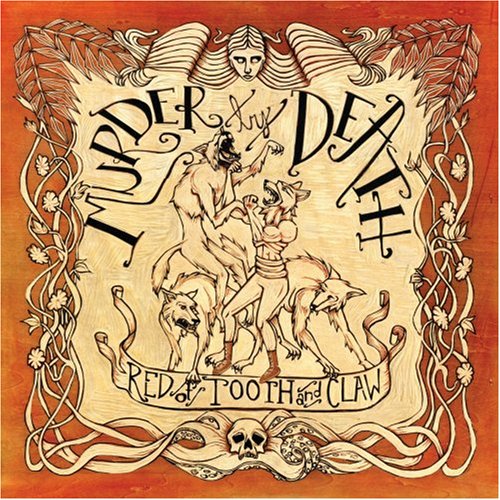
Murder By Death "Red of Tooth and Claw" Review


When one hears the band name Murder By Death, one might assume they are a death metal band hailing from Eastern Europe and covered in ridiculous black face paint; or maybe they are some lame screamo band in tight black jeans and guy-liner. But few would think the band, which got their name from the 1976 Peter Sellers comedy, would play stripped down, whiskey soaked alt-country.

It’s fitting that the band took their name from a film, as everything about them feels very dramatic and theatrical. Their songs tell stories that are typically told on the silver screen not rock albums. Zombies, pirates, bar fights, prison breaks, and, of course, the devil made up the band’s previous albums, and Red of Tooth and Claw follows suit with it’s tales of murder, lust, revenge, and, of course, the devil. According to singer/guitarist Adam Turla the album is a “Homer’s Odyssey of revenge, only without an honorable character at the center.”

The album begins with the slow-burning “Comin’ Home.” The song is a strong showcase for Adam Turla’s increasingly deep vocals. On 2006’s In Bocca Al Lupo, Turla drew comparisons to the late, great Johnny Cash, but on this new record, he goes even deeper and lower than the Man in Black. Next up is “Ball & Chain,” which in any other band’s hands would have been a simple relationship song, but instead is a sprawling, driving epic that straddles the line between love and lust.

One thing that separates Murder by Death from their peers is cellist Sarah Belliet. Her cello adds depth and moodiness to even the simplest of songs. She also adds to the cinematic feel of the band, as her strings often bring to mind western film scores, especially on the album’s centerpiece “Theme (for Ennio Morricone).” This is no coincidence, as Ennio Morricone is a famed film composer mostly known for his work on Sergio Leone’s spaghetti westerns The Good, the Bad, and the Ugly and Once Upon A Time in the West.

The album closes with the almost doo-wop “Spring Break 1899,” which tells the story of a murderous scoundrel headed south for Mexico in search of salvation. Musically and lyrically the song perfect wraps up the album, and ends it just as epically as it began.

Perhaps next time you are in the mood to watch a film, you should close your eyes and listen to Red of Tooth and Claw instead. You’ll find the experiences much the same.

top